What Is the Anion Gap?
The anion gap is a derived value that helps assess acid-base status by contrasting the main measured electrolytes in a blood sample. It is commonly derived from a serum chemistry panel or other serum electrolytes results, using the relationship between sodium, chloride, and bicarbonate. Clinically, it helps identify whether there are unmeasured anions contributing to an anion deficit and an underlying acid-base disorder.
In simple terms, the anion gap is a diagnostic tool that approximates the difference between positively charged and negatively charged particles in the blood. That difference reflects electrolyte balance and can point to a metabolic disturbance that is not obvious from the individual values alone. Because it is based on routine blood chemistry, it is often used as a screening test during patient assessment.
Most modern labs provide the ingredients needed for the calculation as a standard laboratory result. Even though the concept sounds abstract, the practical use is straightforward: if the gap is elevated, clinicians think about causes of metabolic acidosis, especially high anion gap metabolic acidosis.
Formula for Anion Gap Without Potassium
The most commonly used calculation method without potassium is:
Anion gap = sodium - (chloride + bicarbonate)
This method uses sodium level, serum chloride, and bicarbonate value values from the lab. If you're using an Anion Gap Calculator, this is usually the default approach because it is more straightforward and matches common clinical practice.
All values are typically reported in mEq/L. The formula deducts the total of chloride and bicarbonate from sodium. Since sodium is the primary measured cation in the panel, and chloride plus bicarbonate are the principal measured anions, the result approximates the space left by negative electric charge from unmeasured substances.
Even though some older formulas also included potassium, many clinicians omit it because the contribution is small and rarely changes the practical interpretation in practice. A simplified formula makes the calculation more convenient without sacrificing much utility in routine use.
If you are checking the result manually, make sure the units match and that the numbers come from the same lab values set. An error in units or transcription can alter the result significantly.
Step-by-Step Computing Demo
Below is a basic sample calculation using common test values:
- Sodium = 140 mEq/L Cl = 102 mEq/L HCO3 = 24 mEq/L
Applying the formula:
Anion gap = 140 - (102 + 24)
Start by combining chloride and bicarbonate:
102 + 24 = 126
After that subtract from sodium:
140 - 126 = 14
This value is 14 mEq/L. Depending on the laboratory normal range, this may AG vs OG interpretation be considered normal or mildly elevated. For that reason the result must always be interpreted within the clinical context rather than as a stand-alone number.
Having an anion gap calculator can minimize arithmetic mistakes, but the manual method is easy to confirm. The key is to remember the exact equation and to use current lab values rather than outdated results. When values change rapidly, the gap can shift along with the patient’s blood acid-base status.
Normal Interval and Analysis
A normal anion gap depends on the laboratory reference range, the testing method, and whether potassium is included. In many cases, a common non-potassium result is roughly in the low teens, but the exact reference interval changes from one lab to another. Always review the number with the lab’s stated range instead of relying on a universal cutoff.
A raised anion gap suggests extra unmeasured acids in the blood. This pattern is commonly associated with metabolic acidosis, especially high anion gap metabolic acidosis. The finding can help focus the differential diagnosis, but it does not identify the cause by itself.
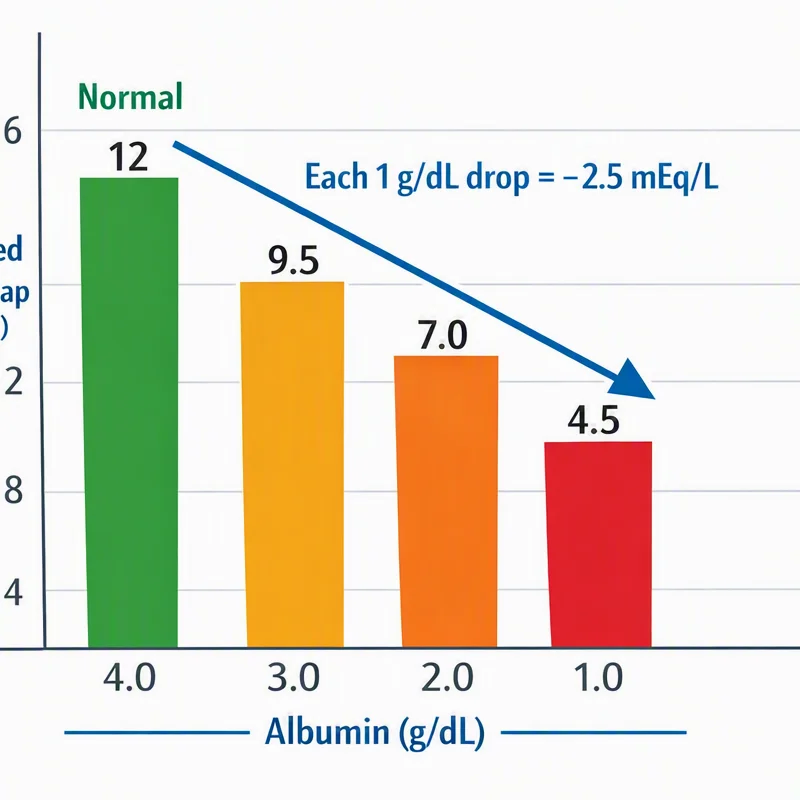
One important factor is albumin. Because albumin is a major unmeasured anion, low albumin can make the anion gap appear lower than expected. In those cases, clinicians may use an albumin-corrected anion gap to get a more accurate corrected value. This is especially useful when evaluating a suspected acid-base disorder in patients with hypoalbuminemia.
Interpretation should also distinguish high-gap from normal anion gap metabolic acidosis. A normal gap does not rule out acidosis; it may indicate bicarbonate loss with a compensatory rise in chloride, as seen in normal-gap patterns. That is why the number should always be viewed alongside the full chemistry panel and the broader clinical picture.
How come Potassium Is Often Left Out
Potassium is often excluded because its concentration is much lower than sodium, and the difference usually has limited impact on everyday clinical practice. The simplified formula boosts consistency and accelerates use in busy settings. Many forms of laboratory reporting also leave out potassium for this reason.
From a practical standpoint, leaving potassium out makes the calculation easier to remember and reduces the chance of error. The change in result is usually minor enough that it does not change the general conclusion, especially when the goal is early screening rather than highly specialized analysis.
That said, the omitted-potassium method is not a different concept. It is the same physiologic idea, just a streamlined approach built into many calculators and lab systems. If an older source includes potassium, the resulting number will be slightly higher, but the overall assessment of acid-base status often stays similar.
In other words, the anion gap calculator commonly used in practice is based on the abbreviated formula because it is practical, reliable, and adequate for most patient assessment scenarios.
Reasons of a Elevated Anion Gap
A high result indicates excess acid or unmeasured anions in the bloodstream. Common causes include lactic acidosis, ketoacidosis, renal failure, and toxic ingestions. Each of these can increase the gap for a different reason, but all lead to an increase in hidden acids.
Lactic acidosis happens when lactate collects, often in contexts of inadequate perfusion, severe illness, or impaired oxygen delivery. Ketoacidosis occurs when ketones build up, such as in diabetes or prolonged fasting. Renal failure can decrease acid excretion, permitting acids to collect. Toxic ingestions may introduce substances that are metabolized into acids or that interfere with normal metabolism.
These causes are especially important when the anion anion gap clinical significance gap is elevated together with signs of metabolic acidosis. A clinician may view the gap as a clue, then pair it with history, physical findings, and additional testing to find the underlying problem. The gap itself is a indicator, not a final diagnosis.
Because different disorders can produce the same pattern, the value should be considered part of a larger diagnostic framework. A patient with high-gap acidosis needs a focused evaluation, and the anion gap calculator can help flag the issue early.
Drawbacks of the Anion Gap Calculator
An anion gap calculator is helpful, but it has significant restrictions. The main is albumin adjustment. Since albumin is a major contributor to the normal gap, low albumin can obscure a medically important elevation. When uncorrected, the result may look inaccurately reassuring.
Next, the result varies with the laboratory’s reference range. Different techniques, analyzers, and result-reporting procedures can produce different results, so a result that appears unusual in one setting may be appropriate in another. This is why interpretation should always be tied to the particular laboratory’s reference interval.
Thirdly, lab error can skew the result. Sample mix-ups, delayed processing, or data entry errors can change sodium, chloride, or bicarbonate values. Since the gap is computed from these components, even one inaccurate lab result can cause a misleading conclusion.
Finally, the calculation is only part of the whole of the workup. It does not take the place of a full medical review, arterial or venous blood gas when indicated, or checking for other sources of acid-base disturbance. If used well, it is a useful screening tool; used alone, it can be incomplete.
Frequently Asked Questions
How do you determine anion gap without potassium?
Use the formula the formula sodium - (chloride + bicarbonate). This is the standard basic method and serves as how most anion gap calculator tools use. Input the lab values in mEq/L and deduct the sum of chloride and bicarbonate from sodium.
What is the formula for an anion gap calculator without potassium?
The formula is anion gap = sodium - (chloride + bicarbonate). It takes the key serum electrolytes from the lab panel and leaves out potassium for simplicity. This serves as the most widely used calculation formula in daily practice.
What is a normal anion gap excluding potassium?
The normal values depend on the lab’s reference range and measurement method. Many labs consider a low-teens result normal when potassium is excluded, but you should always compare the number to the reported reference range on that specific laboratory result.
Why is potassium often left out of the anion gap calculation?
Potassium is usually excluded because it contributes relatively little to the overall result. Leaving it out creates a simplified formula that fits common clinical practice and laboratory reporting standards without meaningfully changing everyday clinical assessment.
What does a high anion gap mean clinically?
A high result suggests additional unmeasured acids and is often associated with acid-base disturbance, especially anion gap metabolic acidosis. Common causes include lactic acidosis, diabetic ketoacidosis, renal failure, and toxic ingestions. The value supports evaluation, but the cause requires further assessment.